
Honeyberry Juice
Nature’s Deep Purple Power in Every Sip
Honeyberry Juice: The Deep Purple Drink Packed with Plant Power
Rich in Anthocyanins. Big on Antioxidants. Where Northern Resilience Meets Remarkable Flavor. Discover the Juice Few Americans Have Tasted.
Honeyberry juice (also known as haskap juice) is one of the most exciting functional fruit beverages emerging in the United States. Pressed from whole honeyberries — a cold-climate superfruit — this vibrant purple juice delivers bold flavor alongside a remarkable concentration of naturally occurring plant compounds.
We’re seeing growing interest not just in the berry itself, but in what happens when that berry is transformed into juice. If you’re wondering what makes honeyberry juice special, what research says, and why it may deserve a place in your daily routine, this guide will walk you through it.
The word on the street says honeyberries are really good for you!
Honeyberry juice starts with richly colored, deep-purple honeyberries.
Honeyberries recognized for its unusually high concentration of anthocyanins, particularly cyanidin-3-O-glucoside (C3G) plant compounds give the juice its rich color and are widely studied for their antioxidant activity.
Research reviews of haskap fruit consistently report high levels of polyphenols and anthocyanins that help protect cells from oxidative stress (Rupasinghe et al., 2018; Jurikova et al., 2012).
Early research using haskap berry extract has also shown short-term improvements in blood pressure and episodic memory in older adults, suggesting potential cardiovascular and cognitive benefits associated with anthocyanin intake (Bell et al., 2018).
Additional sports nutrition research has explored anthocyanin-rich haskap products for endurance and recovery support, with some studies in trained runners reporting improved time-trial performance, although this area of research is still developing (Bell et al., 2019).
Haskap berries naturally contain vitamin C as well, but the amount that ultimately appears in juice can vary widely depending on cultivar, processing method, storage conditions, and whether the juice is diluted. Studies comparing juicing techniques confirm that extraction method significantly influences retention of phenolics, antioxidant capacity, and vitamin C levels (Wang et al., 2023). Because of this variability, nutrition can differ noticeably between brands.
Antioxidant Support
Haskaps are naturally rich in anthocyanins and other polyphenols. Multiple compositional studies have shown that Lonicera caerulea contains high total phenolic and anthocyanin levels, which are widely studied for their role in protecting cells from oxidative stress (Rupasinghe et al., 2018; Jurikova et al., 2012).
Heart & blood vessel support
Human research using haskap berry extract has reported acute improvements in blood pressure and vascular responses in older adults, supporting the broader evidence that anthocyanin-rich berries may support cardiovascular function (Bell et al., 2018).
Brain & memory support
In the same pilot dose-response trial, participants consuming haskap berry extract showed improvements in episodic memory, suggesting potential cognitive benefits associated with anthocyanin intake (Bell et al., 2018).
Exercise recovery & performance
Early sports nutrition studies have explored anthocyanin-rich haskap products for endurance and recovery support. Research in trained runners has shown improved time-trial performance following haskap berry supplementation, although this area is still developing (Bell et al., 2019; Whyte et al., 2018).
What people love about honeyberry juice
Besides the beautiful color and the amazing sweet-tart taste, honeyberries are bursting with naturally occurring anthocyanins and beneficial polyphenols—the very compounds that give this berry its deep purple glow and growing reputation in wellness circles. It’s no wonder so many people want honeyberry juice as their daily “purple habit.” With just a small splash, you can bring a vibrant, nutrient-dense northern fruit into your routine year-round—even when fresh berries are long out of season.
How Honeyberry Juice is Made
Small batch – the gentle process behind honeyberry juice.
Berry to Bottle
Turning fresh honeyberries into high-quality juice is both simple in concept and highly dependent on careful handling. Because honeyberries are rich in delicate anthocyanins and polyphenols, the juicing process must be gentle and intentional to preserve the deep color, bold flavor, and nutritional value that make this fruit so special.
Whether produced in a small orchard kitchen or a commercial facility, the basic steps follow the same path.
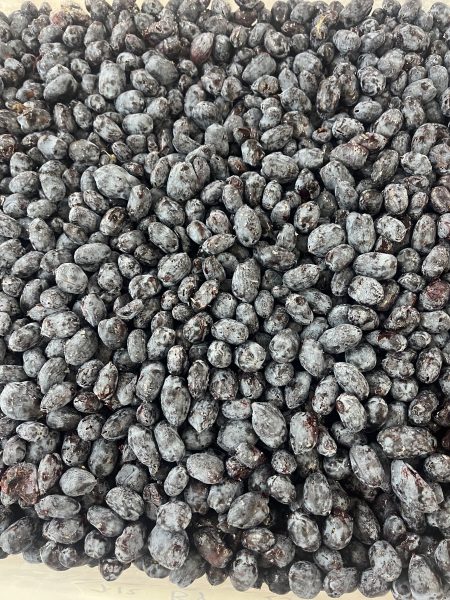
From the Field To the Freezer
Harvest at Peak Ripeness. Everything begins in the field. Honeyberries intended for juice are harvested when the exterior is fully deep blue-purple, the interior flesh is fully ripe (not green), sugars and acids are balanced, anthocyanin levels are near peak.
Under-ripe berries produce juice that is overly tart, lower in color density, and less flavorful. Fully ripe berries deliver the rich, complex profile customers expect. Freeze the berries after harvest. When time allows, make juice from the frozen berries.
Because honeyberries are naturally rich in pigments and organic acids, the juice has an intense purple color, a bright sweet-tart flavor and a naturally high level of beneficial plant compounds.
The key to quality juice is gentle processing, which helps preserve the delicate anthocyanins and polyphenols that make this fruit so unique.
Pressing Honeyberries for Juice
Honeyberry juice is made by pressing ripe honeyberries to extract their deep purple liquid.
Before pressing, the berries can be taken out of the freezer and moved to the refrigerator to ‘melt’. This releases the juices. After the berries are gently crushed, the mash is transferred into a fruit press — commonly a basket press, bladder press, hydraulic press, or commercial belt press depending on the scale of production.
Pressure is applied slowly and steadily to separate the rich purple liquid from the skins and pulp. This stage is more important than many people realize. Research shows that excessive pressure or heat can damage delicate anthocyanins, diminish aroma compounds, and reduce long-term color stability.
For honeyberries in particular, gentle, controlled pressing helps preserve the vibrant color, bright flavor, and valuable plant compounds that make the juice so special. Simply put, slower and more careful pressing typically produces a higher-quality honeyberry juice.
Special Tip: Save the pulp! Freeze-drying the pulp into powder is the best way to use ALL the berry for all its goodness.
The finished Product – Honeyberry Juice
Once pressed, the juice is filled into sanitized bottles, sealed, labeled, and stored under controlled conditions. Proper storage is especially important because honeyberry anthocyanins are sensitive to light, oxygen, and heat. Dark bottles are best, but clear will work great too. Make sure it has a good seal to preserve freshness.
To ensure safety and shelf stability, honeyberry juice can be gently pasteurized or cold processed, depending on your goals. Small batch producers choose cold-pressed methods, sometimes paired with high pressure processing (HPP), or strict refrigeration, to maintain maximum freshness and raw character. You can use a water canner to preserve your juice to be storage shelf stable for over a year.
Honeyberry Juice FAQ
Smart, simple answers about this remarkable berry juice.
Is honeyberry the same as haskap?
Yes. “Honeyberry” and “haskap” are two common names for the same fruit species, Lonicera caerulea. Different regions and growers may prefer one name over the other, but they refer to the same remarkable berry.
Can kids drink honeyberry juice?
Yes—when served in age-appropriate portions just like any other fruit juice. Many families enjoy diluting honeyberry juice with water or sparkling water to reduce sweetness and stretch servings.
Do I need to refrigerate honeyberry juice?
It depends on the product. Some honeyberry juices are shelf-stable until opened, while others are kept refrigerated from the start. After opening, refrigeration is usually recommended.

Is honeyberry juice sweetened?
Some are 100% pure juice with no added sugar, while others may be diluted or lightly sweetened. If you are producing small batch, you can decide if you’d like to sweeten your juice with honey or other sweeteners.
What does honeyberry juice taste like?
Honeyberry juice is typically bold and tangy with a rich berry depth. Many people describe the flavor as somewhere between blueberry, blackberry, and raspberry, often with a pleasantly tart finish.
How long does Honeyberry Juice last?
Shelf life depends on how the juice is processed and stored. Once opened, most honeyberry juices should be refrigerated and used within about 5–10 days for best quality.
Our Story
Our Honeyberry Juice Journey
There is power in elderberries and other fruits—but there is something quietly remarkable about honeyberries. These bold little berries are packed with compounds that support long-term wellness, and once you experience them, it’s hard to forget.
Our first taste of honeyberry juice happened at a small orchard. The juice was fresh—made just that week—and kept nicely chilled. Then the grower did something unexpected: he added a bit of carbonation with a SodaStream. Suddenly the flavor came alive. Bright, tangy, and deeply berry-rich… it was even more amazing than we imagined.
He was careful to pour only a small “shot” for each of us, fully aware of how concentrated and special the juice was. In that moment, we were completely hooked… and a little crushed. We didn’t have any of our own to take home.
The only solution? Grow our own.
So that’s exactly what we did. We started by planting over a hundred honeyberry bushes. Today, when harvest comes, we freeze the berries so they’re ready whenever we are. When time allows, we return to those buckets of deep-purple fruit and gently crush them for juice. Sometimes we preserve the juice using a traditional canning method; other times we take a cold-pressed approach and store it in the refrigerator for fresh use.
And if a jar lingers in the fridge a little too long? Nothing goes to waste—it simply becomes the perfect addition to smoothies. The flavor is bright and pleasantly tangy, not unlike Greek yogurt, and it blends beautifully.
Once honeyberry juice becomes part of your routine, it’s hard to imagine your kitchen without it.
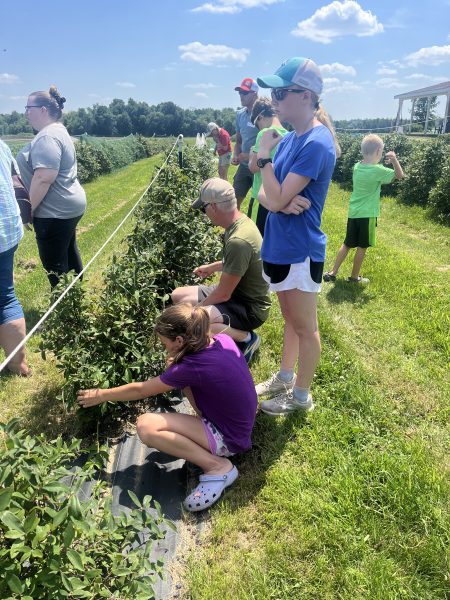
Ready for your own Orchard?
Grow Your Own Honeyberries.
Read our honeyberry story and grow your own berries!
Primary honeyberry research
Research is emerging and ongoing; honeyberries show strong potential, but results vary by product and processing.
- Rupasinghe, H.P.V. et al. (2018). Haskap (Lonicera caerulea): A new berry crop with high antioxidant capacity.
- Jurikova, T. et al. (2012). Evaluation of polyphenolic profile and antioxidant activity of edible honeysuckle berries.
- Bell, L. et al. (2018). Acute effects of haskap berry extract on cognition and blood pressure in older adults.
- Bell, L. et al. (2019). Haskap berry supplementation improves 5-km time-trial performance.
- Whyte, A.R. et al. (2018). Effects of anthocyanin-rich supplementation on exercise performance.
- Wang, Z. et al. (2023). Effect of juicing methods on quality and bioactive compounds of haskap juice.