
Frozen Honeyberries
Learn All There is to Know About Frozen Honeyberries
Frozen Honeyberries
Frozen Honeyerries are King
Frozen Berries For All Seasons
Freezing honeyberries is not just convenient — it is one of the smartest ways to preserve the fruit’s natural benefits. Honeyberries are known for their exceptionally high anthocyanin content (the compounds responsible for their deep blue color), along with vitamin C, fiber, and other polyphenols. Rapid freezing helps stabilize these compounds and extends usability without the need for added sugar or preservatives.
Why Frozen Honeyberries Are Sometimes the Better Choice
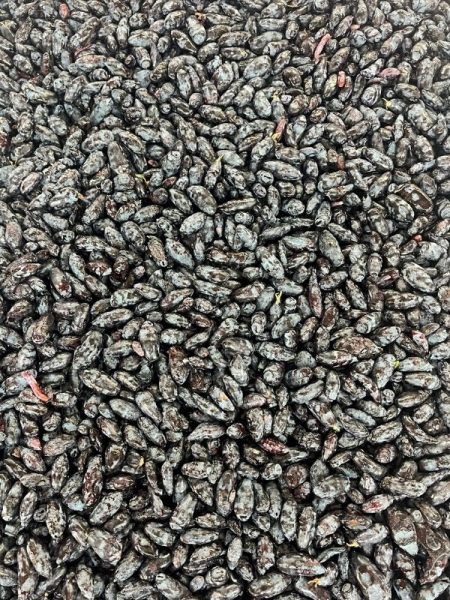
Fresh fruit has its place — but when it comes to honeyberries, freezing is often the smartest and most practical way to preserve what makes this northern berry so special. Honeyberries have a naturally tender skin and a very short fresh shelf life. Within days of harvest, even beautiful berries can begin to soften and lose quality. Rapid freezing, however, captures the fruit at peak ripeness and helps lock in the deep indigo color, bold sweet-tart flavor, and many of the naturally occurring anthocyanins and polyphenols that make honeyberries so valued.
Freezing also dramatically reduces food waste and expands accessibility. Because honeyberries ripen very early in the season — often weeks before strawberries and blueberries — fresh berries are only available for a brief window in late spring to early summer. Frozen honeyberries extend that narrow harvest into a year-round ingredient. For smoothies, baking, jams, and functional nutrition uses, frozen berries often perform just as well as fresh — and in some cases better — because they are picked at full maturity and preserved quickly.
For many households, and small food businesses, frozen honeyberries are not a second-best option. They are the most reliable, practical, and consistent way to enjoy this emerging superfruit throughout the year
Freezing Honeyberries at Your Farm
Quickly freezing the honeyberries during harvest preserves them for months to come.
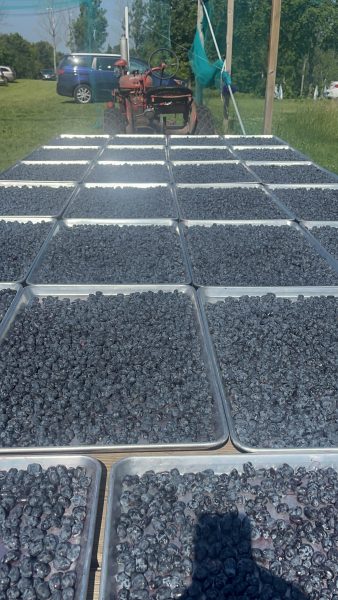
Field Harvest to Freezer
The process most commonly used when harvesting honeyberries is to freeze the fruit within 12–24 hours after picking. This quick turnaround helps preserve the berries’ deep color, fresh flavor, and valuable nutrients. Because honeyberries have a naturally delicate skin and short fresh shelf life, prompt freezing is considered a best practice among growers who want to maintain peak quality.
Freezer Storage Ideas
Once berries have been removed from the plant, cleaned by blowing leaves, dirt, and debris from the berries they are placed on cookie sheets no more than 2-3 berries deep (any deeper and the berries will be crushed). After 24 hours in the freezer on trays, the berries the berries will be fully frozen. Once fully frozen the honeyberries can be transferred into covered food-grade pails. These pails stack efficiently and fit well in larger storage units such as walk-in freezers or used Schwans freezers. Properly stored, frozen honeyberries can maintain excellent quality for extended periods, giving growers and producers flexibility in when the fruit is used.
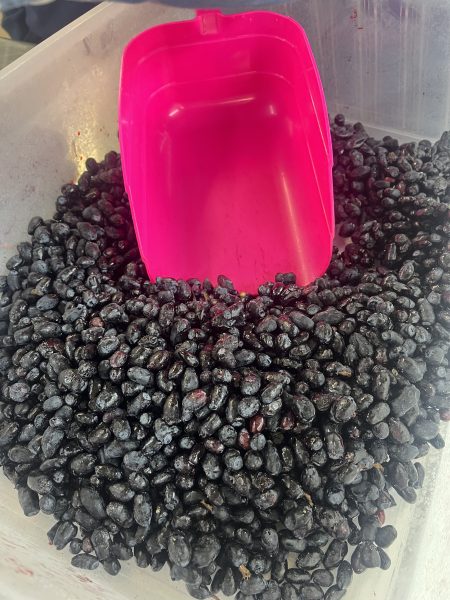
Prepare the Product
When it is time to prepare berries for a finished product such as 1# bags of berries, a pail is removed from the freezer and the frozen fruit is poured into a large, clean tote for easy handling. Placing the frozen berries in a large tote makes it easier to scoop them into smaller bags. Have your labels applied to vacuum bags ahead of time, and a scale ready for weight measurement.

Vacuum Sealed for Freshness
From there, the berries are scooped into vacuum bags, typically portioned into one-pound units. It works best to slightly flatten the bags just before sealing. They will stack better in the freezer. Quick tip: when the berries are removed from the freezer, they begin to thaw quickly and become very juicy, being prepared to move swiftly during this process is essential. Once sealed, place the berries in a tote in the freezer. They are ready for your farmers market sales.
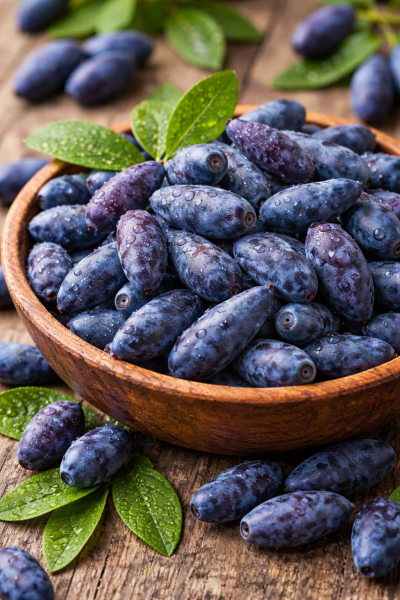
Preserving Berry Goodness
One of the biggest advantages of freezing honeyberries soon after harvest is how well the process helps protect the fruit’s natural nutritional profile. When berries are rapidly frozen at peak ripeness, cellular activity slows dramatically, which helps stabilize many of the beneficial compounds that make honeyberries so valued. While no preservation method is perfect, properly frozen honeyberries retain much of the goodness that was present at harvest — making them a practical, year-round option for nutrition-minded kitchens.
Fruit harvested at peak maturity preserves much of its original nutritional character.
Honeyberries are especially known for their exceptionally high anthocyanin content — the deep blue-purple pigments linked to antioxidant activity. Research on haskaps (honeyberries), including work led by Dr. Bob Bors at the University of Saskatchewan, has highlighted the berry’s naturally rich polyphenol profile. Rapid freezing helps protect these color compounds and polyphenols by slowing oxidation and enzymatic breakdown. In simple terms, freezing helps “pause the clock” on many of the changes that would otherwise occur in fresh fruit over time.
Vitamin C is somewhat more sensitive to storage conditions, but a meaningful portion can still be retained when berries are frozen quickly and kept consistently cold. The physical fiber structure of the berry is also largely preserved through freezing, which means frozen honeyberries still contribute dietary fiber and maintain their usefulness in smoothies, baking, and whole-food applications. The berries’ striking natural color — one of their most recognizable features — also holds up very well in frozen storage when handled properly.
For growers and consumers alike, this is why freezing has become the preferred preservation method in the emerging honeyberry industry. It allows the fruit to be harvested at peak maturity, stabilized quickly, and enjoyed months later with much of its original nutritional character intact. When done correctly, frozen honeyberries remain one of the most efficient and reliable ways to bring the power of this northern berry into everyday use.